

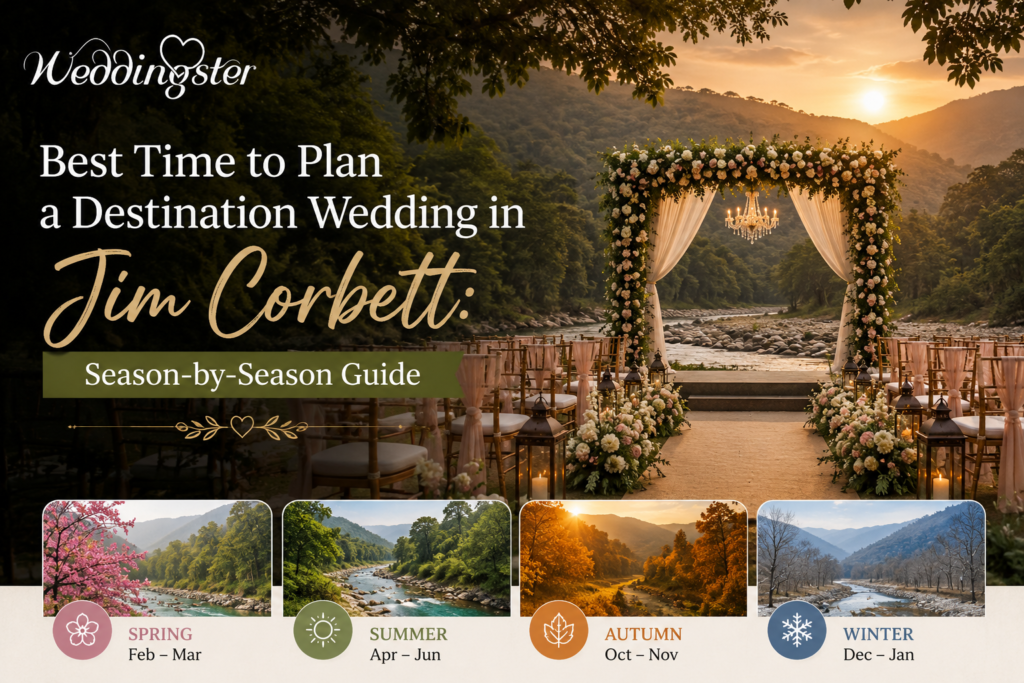
A destination wedding in Jim Corbett brings together forest views, riverside resorts, and a laid-back hill-adjacent charm that few venues in North India can match. But the experience you get, and the one your guests remember, depends heavily on when you schedule the big day. Jim Corbett’s weather shifts sharply across the year, and each season changes what’s possible for your ceremony, décor, and outdoor events. This guide breaks down every season so you can pick a date that suits your guest list, your budget, and your vision for the wedding.
Why Timing Matters for a Jim Corbett Wedding
Jim Corbett sits at the foothills of the Himalayas, so its climate is more variable than plains cities like Delhi or Lucknow. Daytime and nighttime temperatures can swing widely, monsoon rainfall can disrupt outdoor setups, and peak tourist season affects resort availability and pricing. Before locking in a date, it helps to weigh four things: guest comfort, venue and vendor availability, photography light and backdrop, and overall cost. The season breakdown below covers all four for each part of the year.
Winter (November to February): The Most Popular Wedding Season
Winter is widely considered the best time for a wedding in Jim Corbett, and it’s easy to see why. Daytime temperatures typically stay in a comfortable range for outdoor ceremonies, while cool evenings are perfect for bonfire lounges, fairy-lit mandaps, and outdoor dinners. The forest cover looks lush after the monsoon, river levels are manageable for riverside shoots, and clear skies make this the strongest window for both daytime and sunset photography.
This is also peak wedding season across North India, so resorts near Jim Corbett get booked out early, sometimes six to nine months in advance for December and January weekends. Rates for venues, catering, and décor also run higher during this window. If your guest list includes people traveling from other states, winter offers the most predictable weather for travel and outdoor events, but you’ll want to lock in your venue and vendors well ahead of time.
Summer (March to June): Budget-Friendly but Demanding
Summer in Jim Corbett brings noticeably higher daytime heat, especially by May and June, along with longer daylight hours. This works in your favor if you want early morning or late evening ceremonies, since resorts often have shaded lawns, indoor banquet halls, and pool-adjacent spaces built for this stretch of the year. Vendor and venue costs tend to drop compared to winter, and last-minute bookings are far easier to secure.
The tradeoff is guest comfort. Midday outdoor events are difficult to plan around the heat, and travelers coming from cooler climates may find the peak afternoon hours uncomfortable. Many couples who marry in this window schedule ceremonies for early morning or after sunset and keep daytime plans limited to indoor or shaded venues.
Monsoon (July to September): Scenic but Unpredictable
Monsoon transforms Jim Corbett into a deep green, mist-covered landscape that photographs beautifully, and it’s a season some couples deliberately choose for that dramatic backdrop. Rainfall is heavy and inconsistent though, which makes outdoor ceremonies risky without a strong backup plan. River levels also rise, and some forest-adjacent areas can be harder to access.
If you’re drawn to a monsoon wedding, prioritize venues with covered outdoor spaces or large indoor halls, and build flexibility into your day-of schedule. Vendor rates are typically at their lowest during this period, and venue availability is rarely an issue, but weather-dependent events like sunset shoots or open-lawn receptions need a solid contingency plan.
Early Winter Transition (October): An Underrated Sweet Spot
October sits right after monsoon and before peak winter demand, and it’s one of the most underrated windows for a Jim Corbett wedding. Rainfall tapers off, the forest is still vividly green, and daytime temperatures are mild without the harsh heat of summer. Because it falls just before the winter rush, venues and vendors are more available and often priced lower than the November to February window, while still offering comfortable weather for outdoor events.
Choosing Your Date: A Quick Decision Framework
If your priority is guest comfort and reliable weather, November through February is the safest bet, provided you book early. If budget flexibility matters more than peak-season polish, March through June or the monsoon months offer real savings, as long as you plan around the heat or rain. If you want a middle ground with good weather, greener scenery, and easier availability, October is worth serious consideration before the winter rush begins.
Frequently Asked Questions
What is the best month for a destination wedding in Jim Corbett?
December and January are the most popular months due to cool, dry weather and clear skies, ideal for both outdoor ceremonies and photography. October is a strong alternative with milder crowds and lower costs.
Is a monsoon wedding in Jim Corbett a good idea?
It can work well for couples who want a lush, dramatic backdrop, but it requires venues with covered spaces and a backup plan for rain-dependent events like outdoor ceremonies or sunset shoots.
How far in advance should I book a winter wedding in Jim Corbett?
Since winter is peak season, it’s best to book your venue and key vendors six to nine months ahead, especially for weekend dates in December and January.
Is summer too hot for a Jim Corbett wedding?
Summer days can get warm, particularly in May and June, but resorts with shaded lawns, indoor halls, and pools make it workable, especially for early morning or evening ceremonies at lower cost.
